It’s been a minute

We drove home from Colorado in April and life and work has kept us busy.

Sadly my bees froze over the winter and most of my fellow beekeepers also lost a high percentage of their hives due to weather and mites.

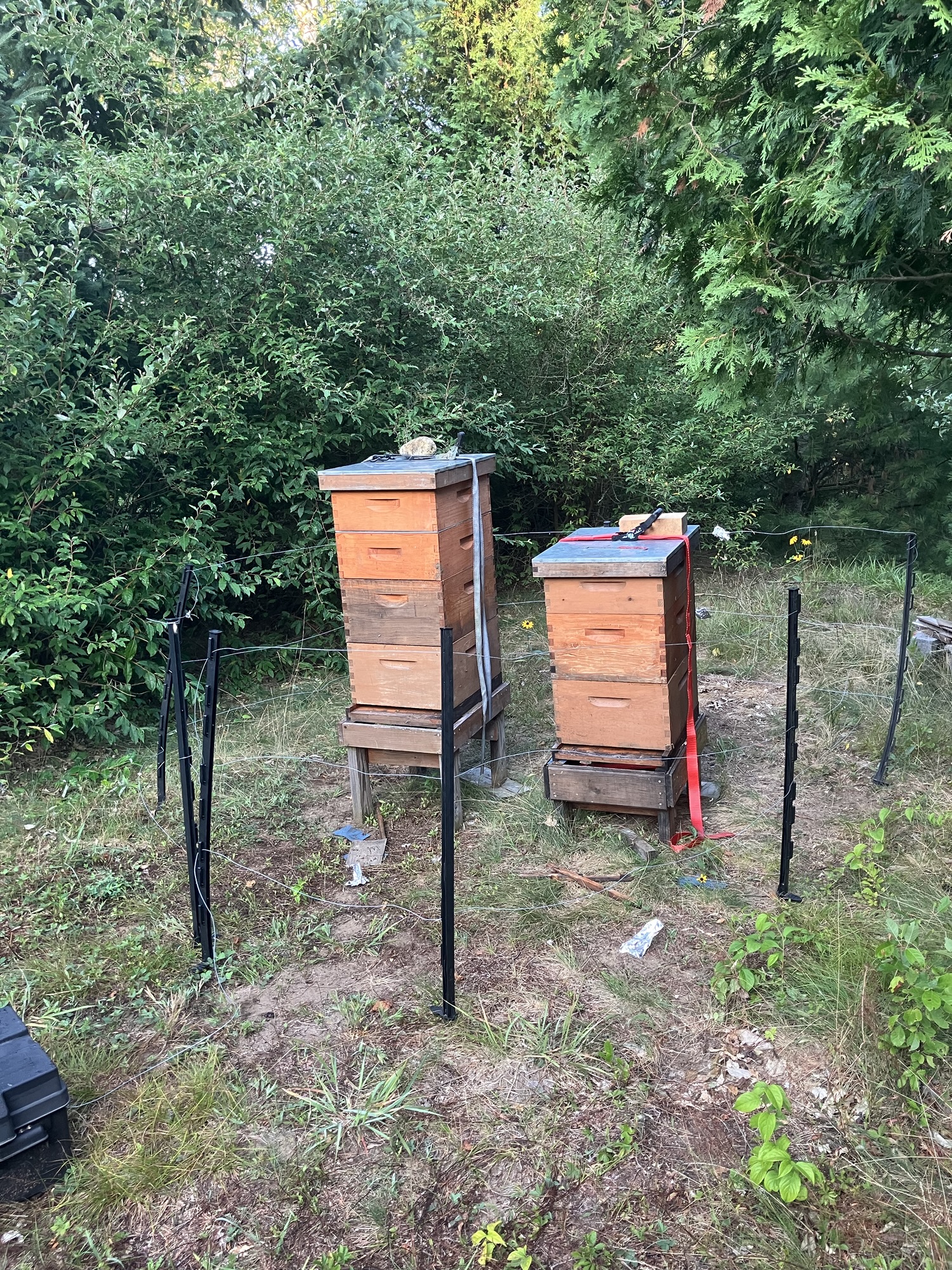
I repopulated them and all was going well until a bear got into one of them. The electric net was stomped, hive frames, where the unhatched bees live, were scattered 100 yards down the hill. Honey attracts the bears but they really want the protein from the larvae.
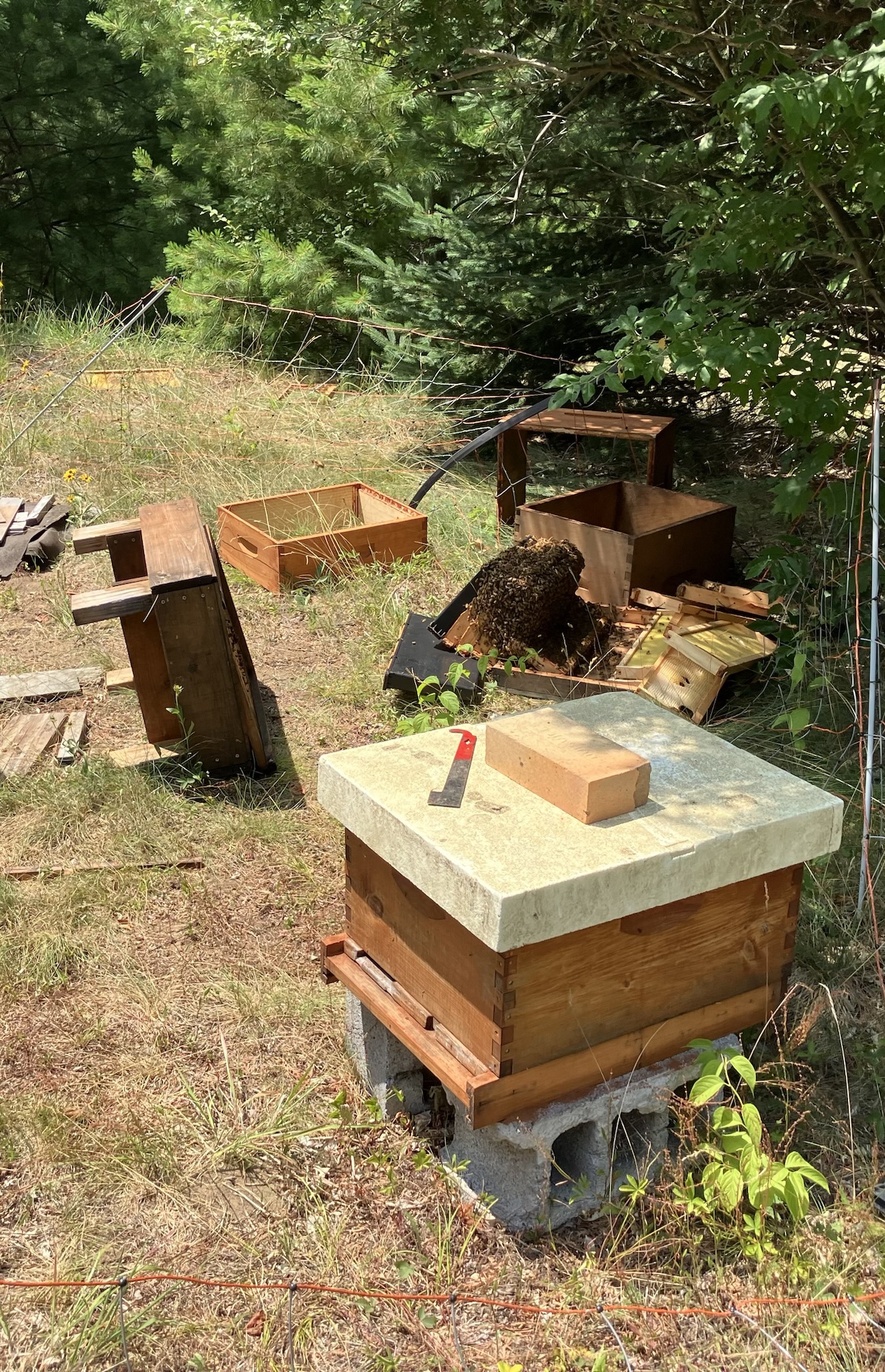
The remaining bees were huddled on the ground and on one frame.
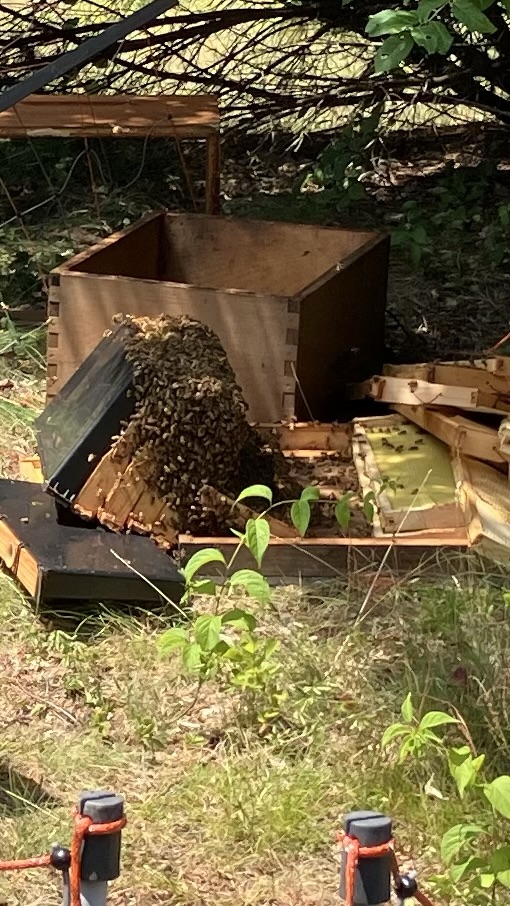
I put the hive box back together but I never saw the queen and could only hope she was ok. The clump of bees may have been a sign. I added an AC charger to the electric fence.

I called the NY conservation ranger who scheduled a site visit. Before she could get here, the bear came back and got the second hive.
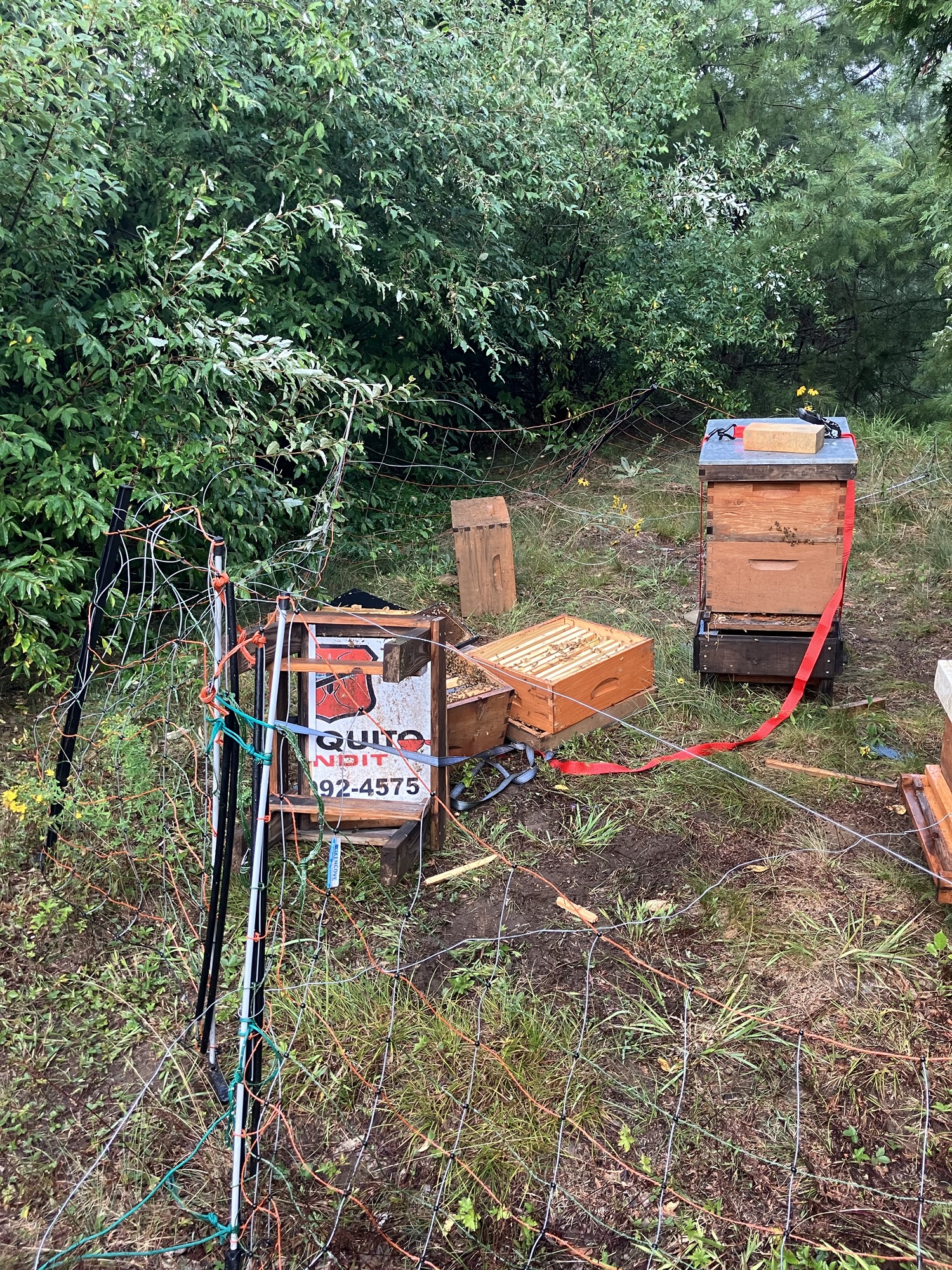
I was very discouraged. With Tim’s help, we tripled the electric wire and baited it with peanut butter on foil.
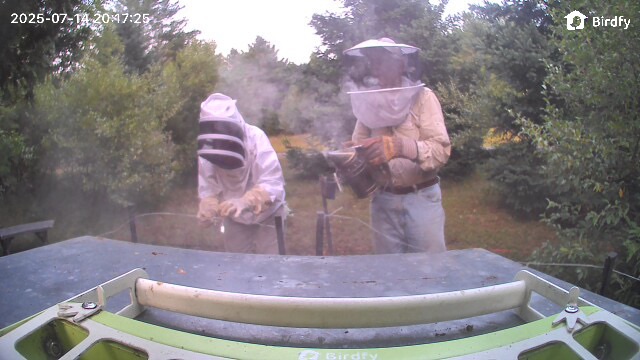
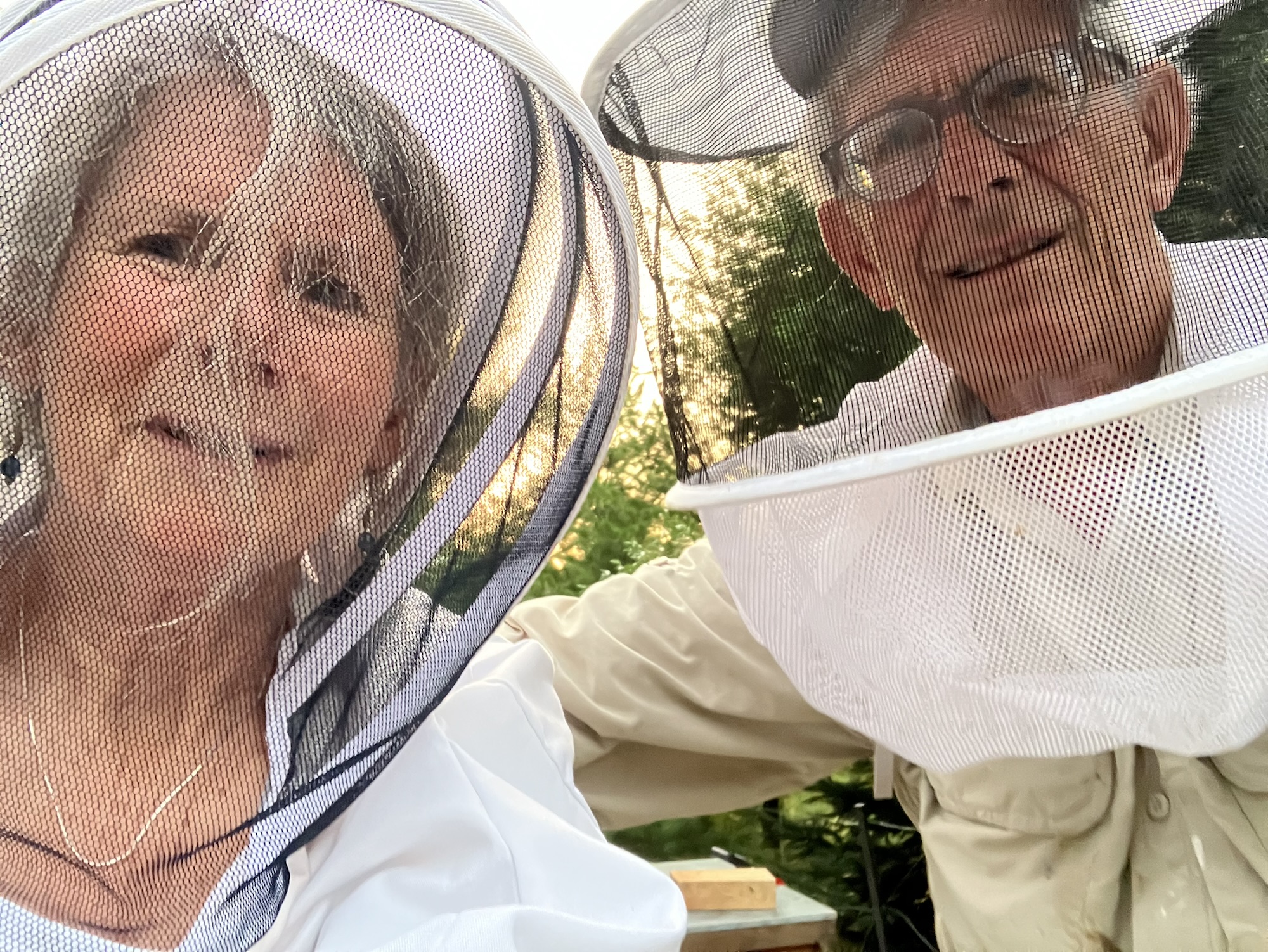
The bees were pissed. One got under my suit and stung me under the arm. I stripped my clothes off in the front yard. Tim got stung in the hand and the Ranger got stung in the face! They were not acting like their usual mellow selves.

I was advised my fence was in good order, it was a nuisance bear to livestock (my two hives), and I was permitted to shoot it. Hmmm, I don’t think so.

I checked the bees a week later and, miraculously, both queens survived and were laying eggs. Meanwhile the workers were storing tons of honey. I added more honey boxes and will wait and see. It’s been 10 days since the last bear visit.
In the meantime, the deer get bolder.

At least they don’t eat my bees! They better leave my garden alone.

Time to explore

The bees around the lighthouse are busy pollinating the marigolds, beach roses and ragwort. My neighbor spotted a few bees at my hive. I suspect they are merely robbers but time will tell.

We took the Maine DOT ferry to Swans Island last week with bikes and had a grand time despite all the hills. One stop was the Burnt Coat Harbor Lighthouse. It shows what a community working together can accomplish. From about 2007 to now, they restored it to its current, pristine state. Well worth the stop.

After another hike, we drove Acadia’s Park Loop Road. We saw first hand some of the parking issues elsewhere in the park. There was a mile long line of cars parked alongside the popular Sand Beach.

We found some quiet spots anyway – not at Sand Beach

As summer rolls by, many beautiful boats pass the lighthouse.

They make us wonder, for a moment, if we would like another boat, besides Sparky.

Just for a moment.

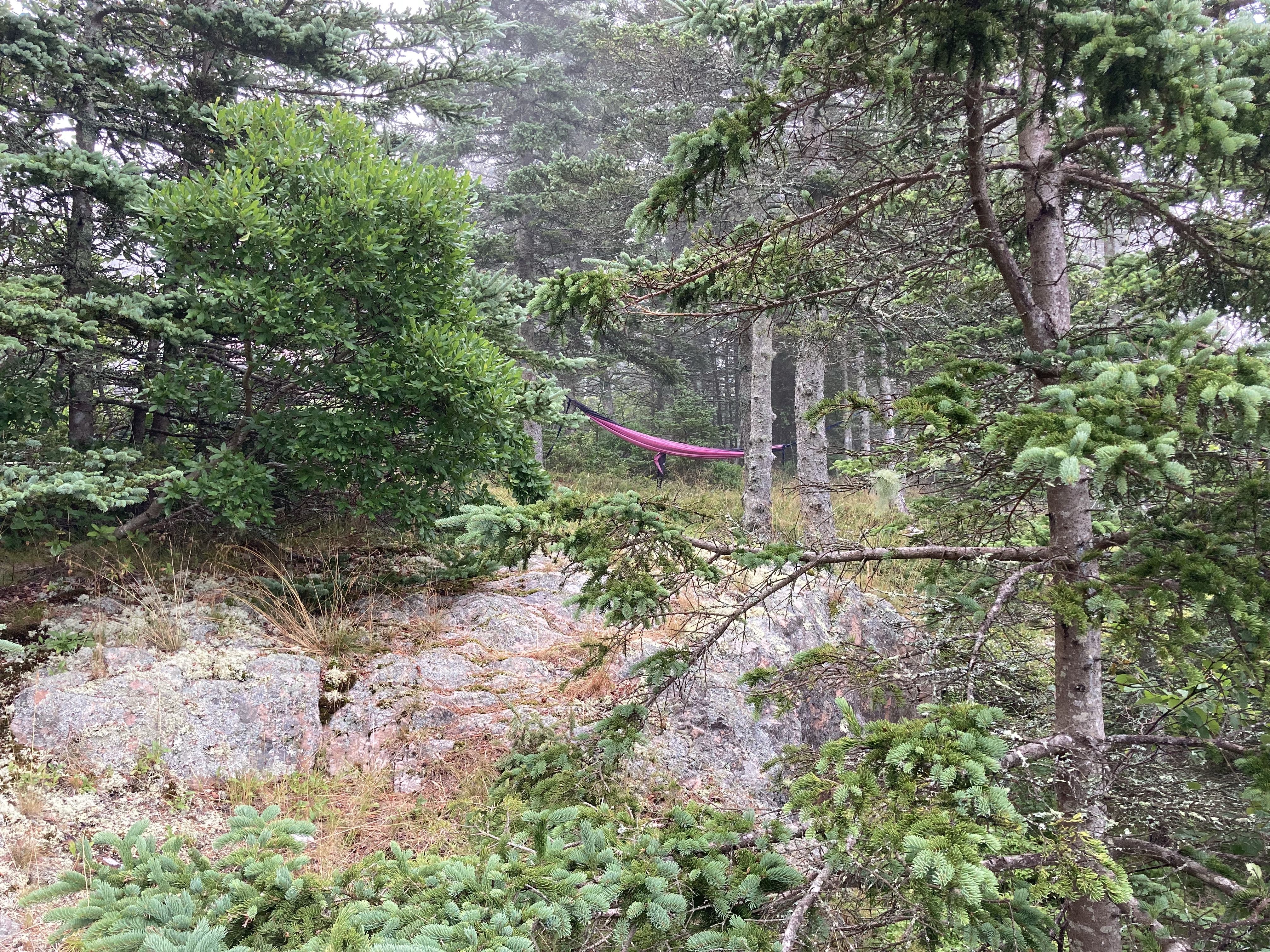
The hammock offers a peaceful retreat from the crowds. There is usually a breeze and it rocks me right to sleep.

While the sunset is beautiful, we discovered you can’t actually see the sun sink below the horizon from the rocks, in summer. It’s a winter spectacle when it sets further south.

Loving home

Friends came to town and we spent the week exploring the Adirondacks with them. I always wonder why we travel so much when we love where we live. Ah well, the adventurer in us all.

We hiked long and short hikes, up mountains, around lakes and through some mud. The views make it all worthwhile.

view from Nun-Da-Ga-O ridge

I spend a lot of time looking down, watching my feet and there is a lot to see there as well. It has been a wet summer and mushrooms flourished.

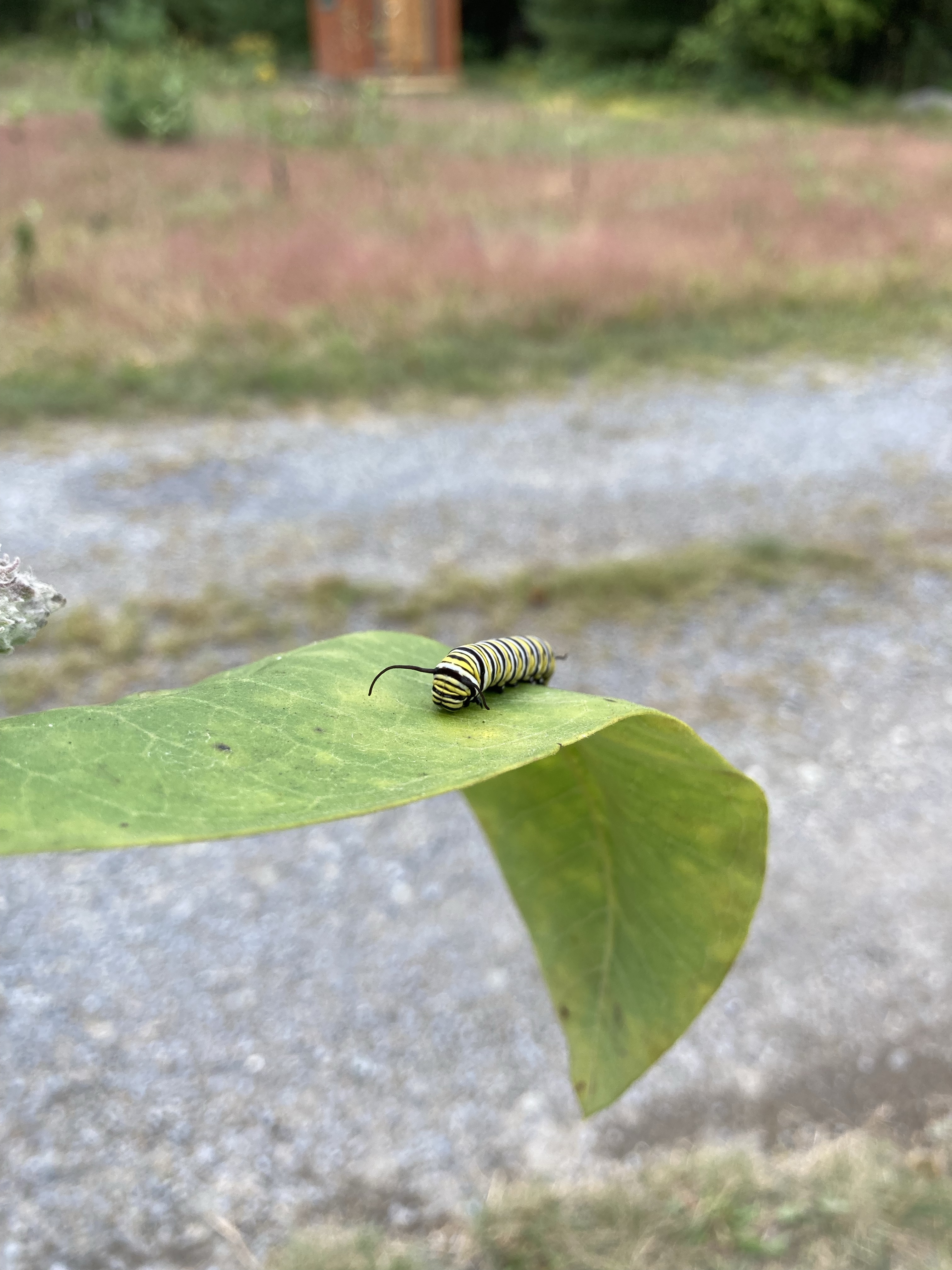
Back on the home front, I was hopeful I would get to see a monarch chrysalis. Our yard is covered in milkweed. We saw a few caterpillars sampling the leaves but none hung around for us to watch.

But as the DH always says, “There is no such thing as paradise”. Despite the pandemic and uptick in cases, a local music festival brought lots of visitors to town; we got out of dodge and headed to the Great Camp Sagamore.

It is situated on its own lake, which unfortunately was only about 62 degrees f. We chose to swim anyway, Tim with a wetsuit, me, without. I figured I had about 30 minutes until hypothermia set in. I swam close to shore just in case and was fine, but slow for my swim. As soon as I was finished, I got out of my bathing suit and put on wool leggings, a wool shirt, cashmere sweater and fleece. It wasn’t enough. I was shaking so hard, I couldn’t bring my lunch to my mouth. I headed for the shower instead and a ten minute steamy shower did the trick.

I came out of the shower to find this creature on our bed. I walked around it and didn’t see it doing much, then I wriggled the blanket, nothing. Jokester DH had found a fishing lure and thought it would be a nice surprise for me.

We returned home to our peaceful cabin. Now it’s my turn to make sure the bees are fed for the winter. There was not enough honey for me to take another harvest so I put the boxes with partially filled honey frames below the larger brood boxes. I think they will clean them out and move the honey up to the brood boxes over the next couple of weeks. In the meantime, I am also feeding them sugar syrup. So far I have given them 30 pounds of sugar in a syrup mixture and more to come.

Wildcamera

I’ll weigh the hives in a few weeks to make sure they have enough food to last the winter.

In the meantime, I will enjoy the view from home.

I’m in the honey

My first harvest is in! The process is pretty straight forward but too sticky to photograph.

First, I selected frames that were completely full of honey and capped by the bees with wax. The bees know when the moisture content is just right. I only took six frames from one of my three hives. I “encouraged” the bees to leave the frames with a stiff shake and a gentle brush.

The honey house was ready with a honey extractor, wax uncapping knife, 5 gallon food grade bucket and lots of jars. The wax is sliced off the honeycomb, then two frames are centrifuged and the honey is flung to the sides of the extractor drum where it slowly drips downward. Turn the frames over and repeat, and repeat.

Next the honey, which still had bits of wax in it, is poured and filtered into the 5 gallon bucket and from there is poured into individual jars. The label design came later.

There were about 8 quarts of honey, after the 1/2 cup I licked off my fingers, and it’s worth its weight in gold. Given my investment, that comes to about $275 a quart. Now I know why it is called liquid gold!

and the living is easy

Summertime in the Adirondacks is stunning but brief. The growing season is only four months but is packed with beauty.

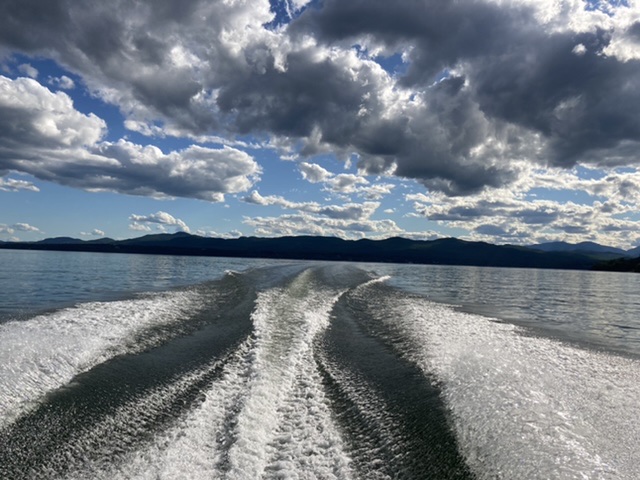
An evening boat ride with friends on Lake Champlain

Tim is already swimming in the ponds. I hesitate, to his dismay: too cold, too windy, too many weeds reaching for my legs and arms. And now I have heard snapping turtles ply these waters. I’ll wade in soon when the deeper lakes warm up.

My local beekeepers’ group met at my hives last week and declared they are doing fine. All three have queens, are laying eggs and gathering honey. That means one hive raised a queen all by itself.

They selected an egg, plumped it up with royal jelly, she hatched, took her maiden flight, mated with a few drones, and made it back to the hive without getting picked off by a bird or dragonfly. And there she will remain for the rest of her days.

Honeybee on milkweed

Perhaps I will get at least one jar of honey in July. This nectar bloom is short and sweet.

Purple clover down the road

We moved to the Adirondacks in the winter of 2009 after only coming up in the snow. How lucky to find summer is even better.

Field down the road
Common merganser (?) under the bridge